Rummy Rules: An Essential Guide for New Players
Understanding the rules of rummy is the first step toward learning the game. While different variations have different requirements, most forms of rummy involve drawing cards, discarding cards, and forming combinations.
For further information on the topic, readers can explore All Rummy.
The Basic Objective
In Indian 13-card rummy, each player receives thirteen cards and tries to arrange them into valid sequences and sets.
A valid declaration typically requires at least two sequences, one of which must be pure. Every remaining card must also belong to a valid combination.
Other rummy variations may use different rules, so this requirement should be checked against the chosen version.
The Draw Rule
At the beginning of a turn, a player usually draws a card from either the closed deck or the open discard pile.
The closed deck contains face-down cards, so the next card is unknown. The discard pile contains visible cards, which can help a player decide whether a particular card is useful.
The choice depends on the current hand and the rules of the game.
The Discard Rule
After drawing, a player normally discards one card.
Choosing what to discard requires consideration of the combinations already formed and those still being developed. A card that does not help complete a sequence or set may be less useful than one that fits a clear plan.
However, players should also consider whether a discard might help an opponent. The visible discard pile can provide useful clues about previously discarded cards.
The Pure-Sequence Rule
The pure sequence is one of the most important requirements in standard Indian rummy.
A pure sequence contains at least three consecutive cards of the same suit without a joker substitution. For example, 8, 9, and 10 of diamonds form a pure sequence.
A hand that contains several sets and an impure sequence may still be invalid if it lacks the required pure sequence.
The Set Rule
A set consists of cards of the same rank in different suits. The exact number of cards permitted depends on the standard rules of the format.
Sets help players organise cards that do not form consecutive runs within a single suit.
Players should ensure that the set is valid and does not contain prohibited duplicate suits.
Declaration Rules
A declaration signals that a player believes their hand meets the winning requirements.
Before declaring, the player should check every combination and ensure that the hand follows the selected format’s rules. An incorrect declaration may result in a penalty under the applicable scoring system.
Players should not assume that a declaration is valid simply because all the cards appear to have been grouped.
Scoring Rules
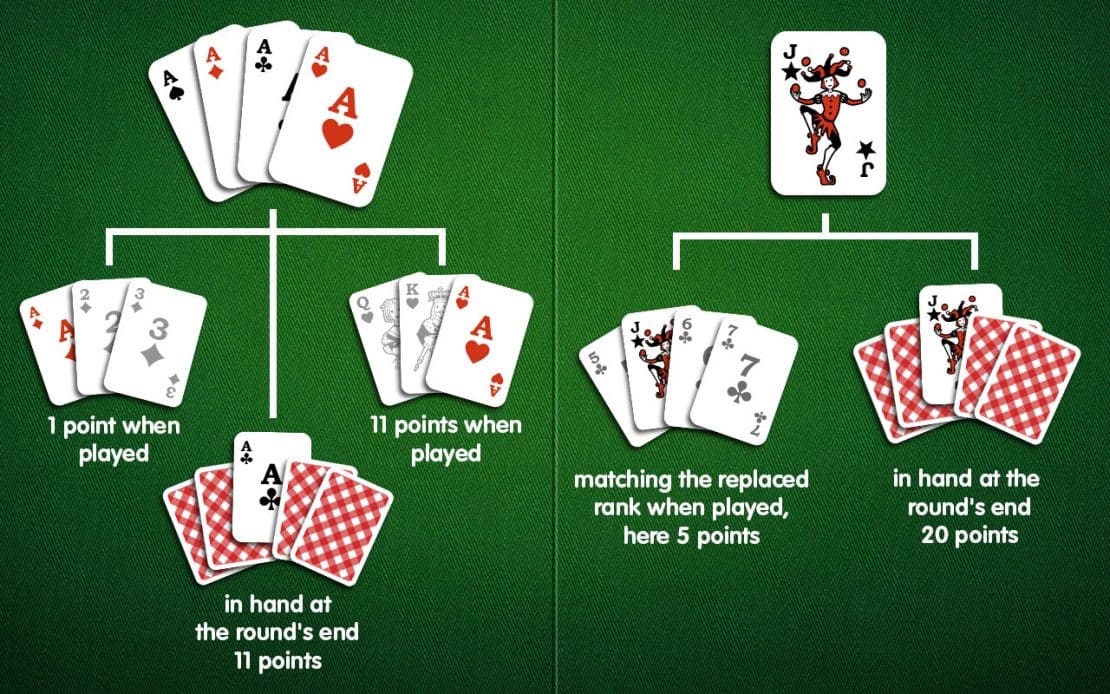
Many Indian rummy formats assign penalty points to unmatched cards. Number cards commonly carry face value, while face cards and Aces are often worth ten points each. Jokers generally carry zero points.
Different formats may calculate totals and penalties differently. Always consult the relevant rules before interpreting a score.
Practical Tips
Learn the combinations first, sort cards clearly, and avoid keeping too many unrelated cards. Review the discard pile before choosing a visible card, and double-check the hand before declaring.
These habits can reduce mistakes, although they cannot guarantee a win.
Where to Find More Information
For related rummy topics, visit https://allrummyss.com/. Readers should check the rules and legal requirements relevant to their location before using any gaming service.
Conclusion
The most important rummy rules concern drawing, discarding, sequences, sets, and declarations. A clear understanding of these basics helps beginners follow the game and recognise valid combinations.