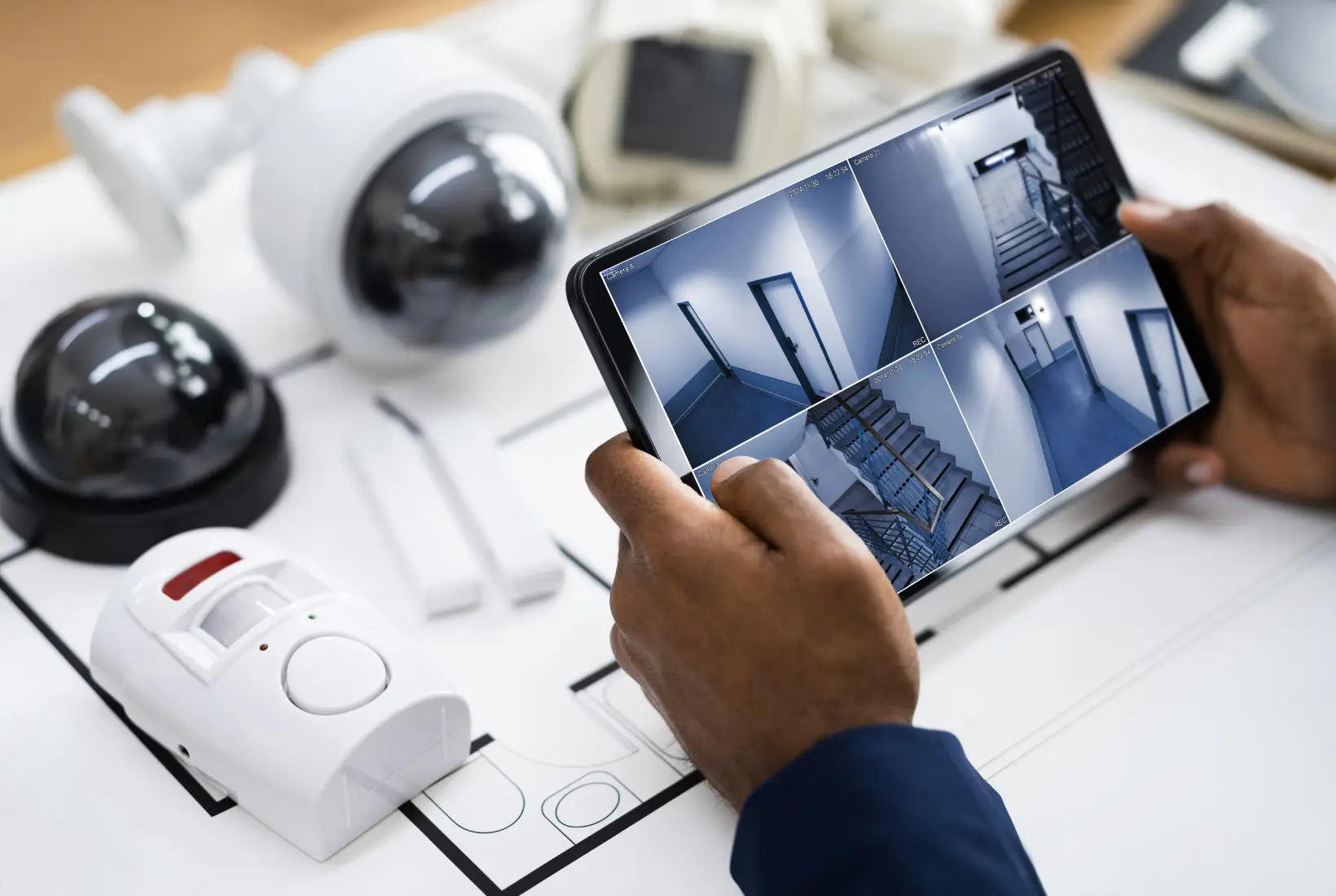
Managing access and safeguarding assets across residential complexes, commercial buildings, and industrial zones demands more than a single-layer approach. Facility managers today face a growing catalog of security technologies — from vehicle barriers and intrusion alarms to biometric entry controls — each promising to solve a different piece of the puzzle. The challenge is not whether to invest in security infrastructure but rather how to compare, combine, and prioritize the right systems for a specific environment.
This guide breaks down the three most common categories of physical security technology, examines how they differ in function and deployment context, and offers a practical framework for deciding which combination best fits a given property profile.
Vehicle Barrier Systems: Controlling Perimeter Access at Scale
Vehicle barriers serve as the first line of defense for properties that manage significant traffic flow — think gated communities, logistics parks, corporate campuses, and shopping centers. The primary function is straightforward: regulate which vehicles can enter or exit a premises, and when.
Modern ระบบไม้กั้นรถยนต์ have evolved well beyond simple boom gates. Today’s options include:
- Automatic boom barriers — integrated with license plate recognition (LPR) or RFID tags for hands-free entry
- Bollard systems — retractable or fixed posts for high-security zones requiring anti-ram protection
- Sliding or swing gate barriers — suited for wider entrances where boom arms are impractical
- Speed gates and tire killers — deployed in military, government, or critical infrastructure settings
When evaluating vehicle barrier solutions, property managers should weigh throughput speed, integration with existing access credentials, maintenance requirements, and the level of physical deterrence needed. A residential condominium, for instance, prioritizes convenience and resident experience, while a chemical plant demands crash-rated barriers that meet international standards such as IWA 14-1 or PAS 68.
Alarm Systems: Detecting and Responding to Intrusions
Where vehicle barriers prevent unauthorized entry at the perimeter, alarm systems focus on detection — identifying when a breach or anomaly occurs and triggering an appropriate response. An effective alarm system typically operates through a sequence of sensor activation, signal processing, alert distribution, and response coordination.
Core components of a modern alarm setup include:
- Motion detectors — passive infrared (PIR), microwave, or dual-technology sensors
- Door and window contacts — magnetic reed switches that signal forced entry
- Glass break sensors — acoustic or shock-based detectors
- Environmental sensors — smoke, heat, flood, and gas detection for comprehensive risk coverage
- Central monitoring stations — 24/7 human-verified alarm response services
The decision between a locally monitored system (on-site alerts only) and a professionally monitored service depends on property size, staffing, and acceptable response time. Industrial enterprises with round-the-clock security teams may prefer local monitoring paired with automated lockdown protocols, while smaller commercial properties often benefit from outsourced central station monitoring that guarantees police or fire dispatch within minutes.
Access Control Systems: Managing Who Goes Where
Access control addresses a more granular question than perimeter barriers or alarms: which individuals are authorized to enter specific areas, at what times, and under what conditions? A well-designed ระบบ access control transforms a building from a space with locked doors into an intelligent environment that logs, restricts, and adapts to occupant behavior.
The technology spectrum ranges from simple to sophisticated:
- Card-based systems — proximity cards or smart cards using RFID or NFC protocols
- Biometric systems — fingerprint, facial recognition, or iris scanning for high-assurance identity verification
- Mobile credentials — smartphone-based access via Bluetooth Low Energy (BLE) or cloud-managed platforms
- Multi-factor authentication — combining two or more credential types for sensitive zones like server rooms or executive floors
For smart industrial zones and large-scale developments, cloud-based access control platforms offer centralized management across multiple sites, real-time audit trails, and the flexibility to adjust permissions without physical key distribution. The total cost of ownership, however, must account for reader hardware, software licensing, credential provisioning, and ongoing system updates.
How These Three Systems Work Together
No single technology provides end-to-end security. The strongest posture comes from layering vehicle barriers, alarm detection, and access control into an integrated ecosystem. Consider a practical example:
- A vehicle approaches a residential estate — the barrier system verifies the license plate against a whitelist and grants or denies entry
- Once inside the building, access control readers authenticate the individual at elevator lobbies and restricted floors
- If an unauthorized person bypasses both layers — say, through a service entrance left ajar — motion sensors trigger the alarm system, which alerts security staff and initiates a camera-linked verification protocol
Integration platforms that unify all three systems under a single dashboard reduce response time, eliminate communication gaps between siloed tools, and provide consolidated reporting for compliance audits. Companies like Liv-24, which specialize in security technology solutions across Thailand, have demonstrated that bundling these layers into cohesive packages significantly reduces deployment complexity for property developers and facility management teams.
A Decision Framework: Matching Systems to Property Profiles
Selecting the right combination depends on several factors unique to each property. The following framework simplifies the comparison:
- Residential condominiums and gated communities: Vehicle barriers (boom gate with LPR) + card or mobile access control + basic alarm system with central monitoring
- Commercial office buildings: Access control (multi-factor for sensitive floors) + comprehensive alarm system + optional vehicle barriers for basement parking
- Industrial parks and logistics hubs: Crash-rated vehicle barriers + biometric access control for restricted zones + environmental and intrusion alarm systems with automated lockdown
- Mixed-use developments: All three systems integrated under a unified management platform, with role-based access policies separating residential, retail, and commercial tenants
Budget allocation should reflect risk priority. A data center, for instance, may allocate sixty percent of its security budget to access control and alarm monitoring, while a public parking facility invests primarily in vehicle management infrastructure.
Conclusion
Evaluating physical security systems is not about finding a single product that does everything — it is about understanding how barriers, alarms, and access controls each address a distinct layer of risk, then designing an architecture that connects them. Property managers who approach this decision with a clear framework, realistic budget expectations, and an eye toward system interoperability will build security infrastructure that scales with their operations rather than constraining them.
For a deeper look at integrated security solutions tailored to residential, commercial, and industrial properties, visit https://liv-24.com/