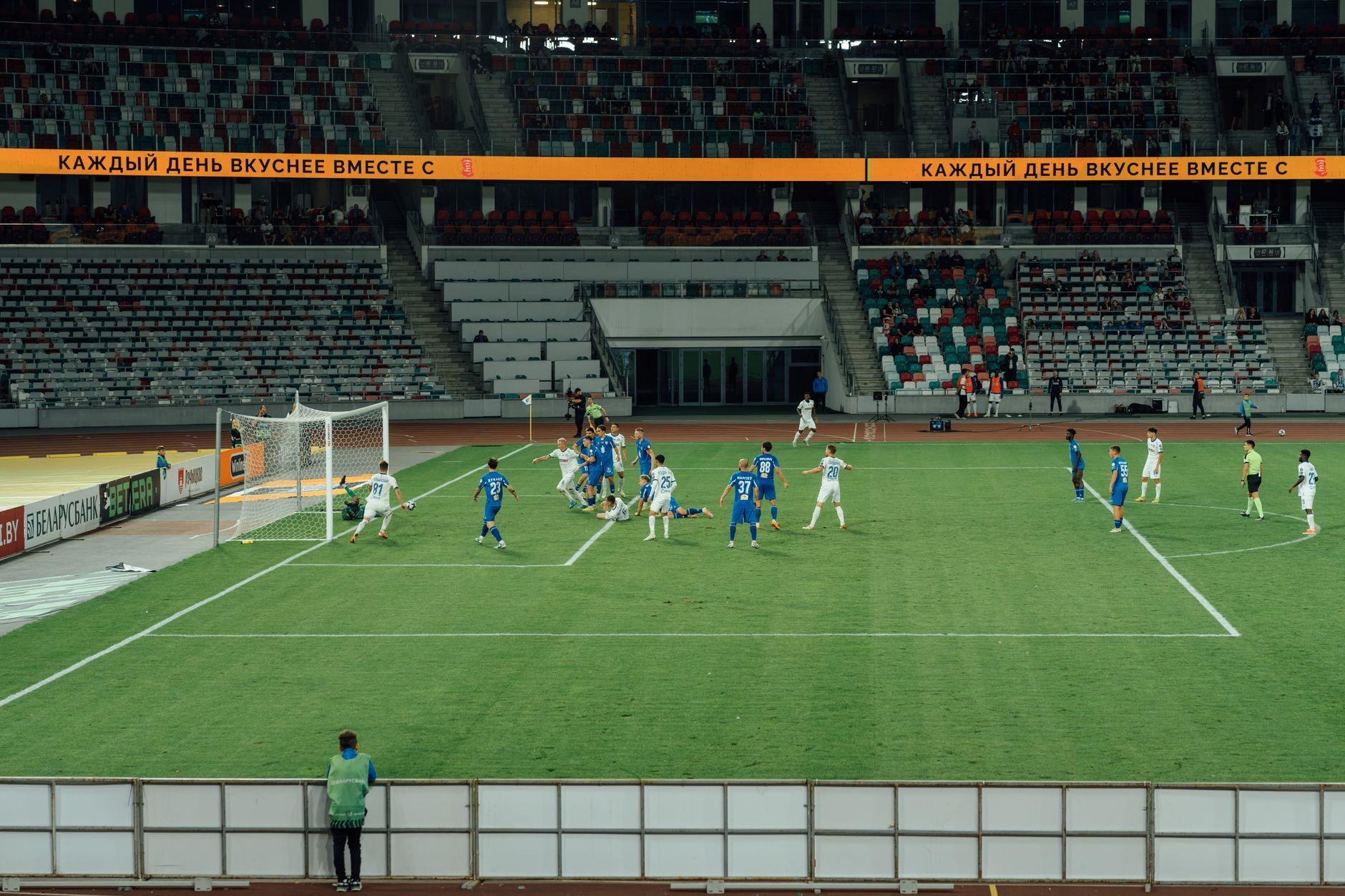
Ảnh minh họa: Siarhei Nester / Pexels
European nights carry a particular tension, and the prices around them change shape as the competition moves on. In the autumn, a Champions League fixture sits on the kèo nhà cái page, the Vietnamese term for the bookmaker odds table, much like any league game. By spring, the same table has to deal with two-legged ties, aggregate scores and the possibility of extra time. Reading those two phases the same way leads to mistakes.
The league phase: thirty-six teams, eight matches
Since the 2024-25 season the competition has opened with a single league table of thirty-six clubs. Each team plays eight matches against different opponents, four at home and four away. The top eight go straight to the round of sixteen. Teams finishing ninth to twenty-fourth enter a knockout play-off round, and those below are eliminated.
That structure affects motivation in a way the old group stage did not. With one large table, a single goal can move a team several places, and the line between the top eight and the play-off places matters a great deal. Late in the league phase, some clubs are fighting for a direct place while others are already safe or already out. Prices for those matches should reflect what each side needs, not just its quality.
In the early rounds, the odds behave much like a strong domestic league. The favourite is priced according to squad strength and home advantage, goal lines are set on the usual expectations, and the result counts only for that night. Rotation is a factor when a big domestic match falls a few days later, as it often does.
The gaps between teams can be wide, too. A club from one of the strongest leagues meeting a champion from a smaller league may be priced as a heavy favourite with a large handicap. These are the matches where the table looks most like a mismatch, and where the goal total is usually set higher.
Knockout rounds: two legs and one aggregate
Once the knockout stage begins, the unit of competition is the tie, not the match. Two legs are played, and the team with more goals on aggregate goes through. The away goals rule was abolished from the 2021-22 season, so if the aggregate is level after the second leg, the tie goes to extra time and, if needed, penalties. The final is a single match at a neutral venue.
This changes how a single match is priced. A first leg is often more cautious, because neither team wants to concede a heavy defeat that would decide the tie early. Goal lines for first legs can therefore be a little lower than the teams' style would suggest. The second leg is shaped entirely by the first: a side trailing by two goals must attack, which tends to open the match, while a side defending a lead may sit deep.
Ảnh minh họa: Hugo Polo / Pexels
Understanding why a second-leg line looks unusual is a large part of what Vietnamese readers mean by giải mã kèo nhà cái, decoding the reasoning behind a number. A favourite priced at only -0.25 at home may look strange until you notice it already leads 3-0 from the first leg and has little reason to push.
Settlement is the other point to check. Handicap and goal markets for a single knockout match normally settle on ninety minutes plus stoppage time. The separate "to qualify" market includes extra time and penalties. Here is a hypothetical example. Suppose Team A and Team B draw 1-1 in the second leg after a 1-1 first leg, and Team A wins on penalties. A stake on Team A to win the match in ninety minutes loses, because the result after ninety minutes was a draw. A stake on Team A to qualify wins.
Habits for following both phases
During the league phase, keep an eye on the table as well as the fixture. A team that needs a point to finish in the top eight might approach the last round very differently from one already safe. Check whether a club has a big domestic game a few days later, since that often drives rotation.
In the knockouts, always read the second leg in light of the first. The aggregate score, not the clubs' general strength, is what decides how each side plays. Note whether the market you are looking at covers ninety minutes or the full tie.
Across both phases, the same basic method applies:
– Convert prices to implied probability with 1 divided by the decimal odds.
– Compare the opening line with the current one and look for a reason behind any move.
– Separate team quality from situation, since the situation often matters more in this competition.
From autumn to spring
The Champions League runs two different kinds of competition under one name. The league phase rewards consistency over eight matches, and its prices look much like those of a strong domestic league with extra rotation risk. The knockout rounds are about ties, aggregates and settlement rules, and a single leg can only be read properly in context. Keeping those phases apart is the simplest way to make sense of the numbers as the season moves toward its final.