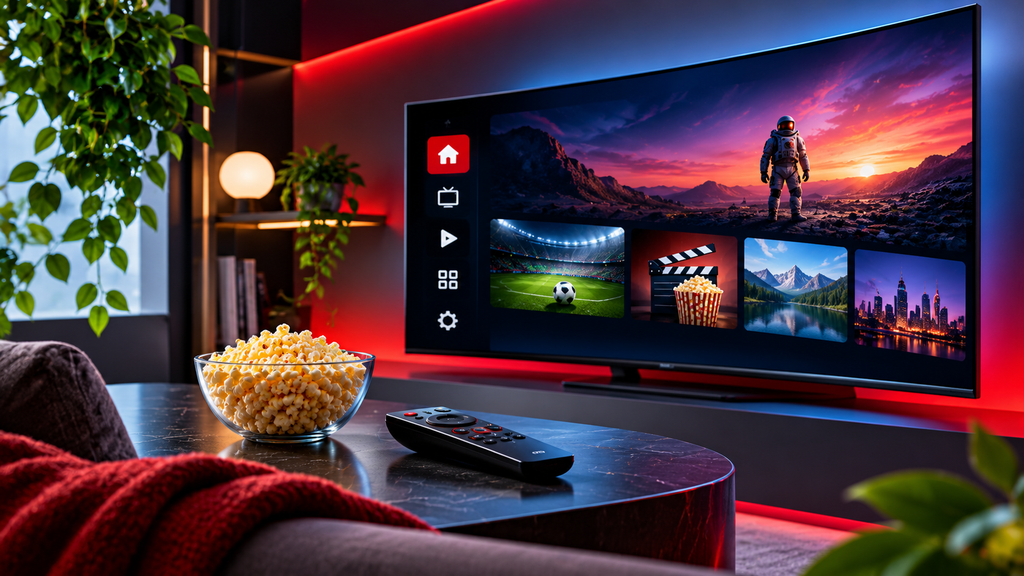
When people think about premium television, they often focus on technical specifications such as 4K resolution, HDR support, screen size, and advanced display technology. While these features contribute significantly to visual quality, they represent only part of what makes television enjoyable.
A truly premium viewing experience involves much more than sharp images. It includes smooth playback, clear audio, intuitive navigation, reliable performance, accessible content, and the ability to find something interesting without spending too much time browsing.
As these expectations continue to evolve, internet-based television services are placing greater emphasis on the overall viewing experience. Platforms such as IPTV Canada reflect the growing interest in flexible digital entertainment, where content accessibility, device compatibility, and convenient navigation are becoming increasingly important. Understanding what makes a television experience feel premium therefore requires looking beyond picture quality and resolution.
1. Reliability: The Foundation of Premium Entertainment
Imagine preparing to watch an important football match or settling down for a movie, only to encounter repeated buffering, unexpected interruptions, or playback errors.
Even with an excellent television, these problems can quickly ruin the experience.
Reliability is one of the most important characteristics of a premium entertainment environment. Viewers expect applications to launch properly, channels to load without unnecessary delays, and programs to play consistently.
Several technical elements influence this reliability:
- Network stability: A consistent internet connection helps prevent interruptions during playback.
- Server infrastructure: Properly maintained content delivery systems contribute to dependable performance.
- Application optimization: Efficient software reduces loading delays and improves responsiveness.
- Device performance: Sufficient processing power and available memory help applications operate smoothly.
Internet-based television depends on several interconnected components. A problem with any part of this system can affect the final experience.
For this reason, reliability should be considered alongside picture quality when evaluating a television service.
2. The Importance of an Intuitive User Interface
A television interface may seem like a relatively minor detail, but it has a significant influence on everyday entertainment.
Viewers interact with menus, program guides, search functions, and content categories every time they use a television application. If these elements are confusing or poorly organized, even a large entertainment library can become frustrating.
A premium interface should make common actions straightforward.
For example, viewers should be able to:
- Navigate between different channel categories.
- Access their favorite channels quickly.
- Search for specific programs.
- Browse television schedules.
- Adjust playback and application settings.
- Return to previously viewed content when supported.
The objective is to reduce unnecessary steps between deciding to watch something and actually enjoying it.
This becomes especially important for households where multiple people share the same television. Different family members may have different levels of technical experience, so simple navigation benefits everyone.
A well-designed interface does not need excessive animations or complicated visual effects. In many cases, clarity and consistency create a much more satisfying experience.
3. Sound Quality: The Often-Overlooked Element
Picture quality receives considerable attention when people purchase televisions, but audio is equally important to overall entertainment.
A movie with excellent visuals can still feel disappointing when dialogue is difficult to understand or background sounds lack depth.
Good television audio should provide a balanced listening experience. Dialogue needs to remain clear, background music should complement the content, and sound effects should create an appropriate atmosphere.
Several technologies contribute to this experience, including Dolby Audio, Dolby Atmos, and compatible surround-sound systems.
However, the equipment is only one part of the equation. Audio quality also depends on the original content, encoding, transmission, and playback device.
For households that primarily use built-in television speakers, dialogue clarity may be more important than complex surround-sound effects.
Soundbars and external speaker systems can provide additional improvements, particularly in larger living spaces.
Ultimately, premium entertainment should engage viewers through both sound and visuals rather than relying exclusively on display specifications.
4. Content Variety and the Freedom to Choose
Another characteristic of a premium television experience is having access to content that reflects different interests.
Not every viewer wants the same type of entertainment. Some households prioritize international news, while others are more interested in sports, documentaries, movies, children’s programming, or regional television.
This diversity makes content selection an important consideration when choosing an entertainment platform.
Internet-based television has introduced additional possibilities for organizing and delivering different types of programming. Depending on licensing arrangements and service availability, viewers may access content from multiple countries and languages through compatible platforms.
This is particularly relevant in multicultural markets such as Canada, where households include people with diverse cultural and linguistic backgrounds.
People researching Canadian IPTV service options may therefore consider more than the number of available channels. Language selection, international programming, content organization, and compatibility with existing devices can all influence the overall value of a service.
A larger content library is not automatically better. What matters is whether viewers can find relevant, appropriate, and legally distributed programming that matches their interests.
5. Device Compatibility and Viewing Flexibility
Modern entertainment is no longer restricted to a single television in the living room.
Smart TVs, streaming devices, Android TV boxes, smartphones, tablets, and computers have created more opportunities to access digital content.
This flexibility has become an important part of consumer expectations.
For example, someone might prefer watching a live sports event on a large television while using a smartphone to follow entertainment or news while travelling.
Device compatibility also affects convenience. Viewers generally prefer services that work with equipment they already own rather than requiring them to purchase additional hardware.
Before selecting an internet-based television platform, it is worth checking:
- Whether the service supports the intended television or streaming device.
- Which applications are compatible with the platform.
- Whether the application supports the required login method.
- Whether multiple devices can be used under the applicable subscription conditions.
- Whether the interface performs consistently across supported devices.
Some services and applications offer different features depending on the operating system and hardware.
A premium experience should provide a reasonable level of flexibility without making installation and configuration unnecessarily complicated.
6. Personalization: Making Television Feel More Personal
Television used to be largely a shared experience organized around fixed broadcasting schedules.
Today, individual preferences play a much greater role in how people organize entertainment.
Personalization allows viewers to make their television environment more relevant to their interests. Features such as favorite lists, customizable categories, viewing histories, and recommendations can make everyday navigation more convenient.
For example, a household that regularly watches international news and sports may prefer having those categories easily accessible instead of browsing through unrelated programming.
Personalization can also reduce the amount of time spent searching for content.
However, there is an important distinction between useful personalization and unnecessary complexity. A television platform should allow users to organize their experience without requiring them to configure dozens of settings.
The best implementations make customization feel natural rather than turning it into another task.
7. Fast Navigation and Minimal Waiting Times
Speed is another factor that influences how viewers perceive quality.
Even small delays can become frustrating when repeated throughout the day. Slow application startup, unresponsive menus, delayed channel switching, and lengthy loading screens can make a television platform feel outdated.
Several factors influence responsiveness, including:
- The processing capabilities of the television or streaming device.
- The efficiency of the application.
- Internet connection quality.
- The performance of the content delivery infrastructure.
- The way program information and channel lists are loaded.
Not all delays originate from the same source, which is why troubleshooting requires considering both the device and the network.
For consumers, the important point is simple: a premium experience should minimize unnecessary waiting and make common actions feel immediate.
8. Accessibility and Comfort for Different Viewers
An excellent television experience should not be designed exclusively for technically experienced users.
Accessibility is an important part of modern entertainment because households include people with different ages, abilities, and levels of digital confidence.
Features such as subtitles, adjustable text sizes, audio descriptions, clear menu structures, and simplified navigation can make television more comfortable for a wider audience.
Remote-control design also matters. Clearly labeled buttons and predictable navigation patterns help users operate applications without constantly consulting instructions.
For international audiences, language options and subtitle availability can be particularly valuable.
These features demonstrate that premium quality is not simply about adding more technology. It is also about making existing technology easier for people to use.
9. Customer Support and Transparency
The relationship between viewers and television providers does not end after a subscription is purchased.
Installation questions, compatibility issues, payment inquiries, and occasional technical difficulties can arise during normal use.
Accessible customer support can make a meaningful difference when these situations occur.
Consumers should be able to understand what a service includes, which devices it supports, how billing works, and what conditions apply to their subscription.
Transparent communication is especially important when evaluating internet-based television providers.
Before choosing a service, viewers should consider whether the provider offers clear information about:
- Subscription terms and renewal conditions.
- Supported devices and applications.
- Available technical assistance.
- Refund and cancellation policies.
- Content licensing and geographical restrictions.
A professional customer experience builds confidence and helps consumers make informed decisions.
10. What the Future of Premium Television May Look Like
The definition of premium television will continue to evolve as entertainment technology develops.
Artificial intelligence, voice recognition, improved search tools, and more advanced recommendation systems are already influencing how audiences interact with digital platforms.
Future television interfaces may become better at understanding natural-language requests. Instead of manually browsing multiple categories, viewers could search for programs using descriptions of what they want to watch.
Improvements in network infrastructure may also contribute to more consistent playback and better support for high-resolution content.
At the same time, accessibility and simplified navigation are likely to remain important priorities.
The challenge for television providers will be combining these developments without making applications unnecessarily complicated.
Technology should improve the viewing experience, not create additional barriers between viewers and their entertainment.
Conclusion
A premium television experience cannot be defined by resolution or screen size alone.
While 4K displays, HDR technology, and advanced audio systems contribute to entertainment quality, other elements are equally important. Reliable playback, intuitive navigation, content variety, device compatibility, personalization, and responsive customer support all influence how viewers perceive a television service.
The most satisfying entertainment environments bring these elements together into one convenient experience.
As consumer expectations continue to rise, television providers will need to focus on the complete viewing journey rather than competing exclusively through technical specifications.
Ultimately, premium television is not simply about what appears on the screen. It is about how effortlessly viewers can access, enjoy, and experience the content they value.